Scenic Area
Stories
-
1489.8 mMaximum Altitude
-
413.14 km²Total Area
-
2000 +Animals and Plants
Tianzhushan is not only the source mountain of Anhui Province, but also one of the birthplaces of the ancient culture of China’s Five Great Mountains. Historical records show that more than 2,000 years ago, during the Han Dynasty, Emperor Wu of Han, Liu Che, climbed Tianzhushan during his southern tour, built an altar, and offered sacrifices to the sacred mountain, proclaiming it the Southern Sacred Mountain. In 589, Emperor Wen of Sui reassigned this title to Mount Heng in Hunan as part of his effort to consolidate the southern frontier. From then on, Tianzhushan became known to later generations as the “Ancient Southern Sacred Mountain.”
Tianzhushan is also a center for scientific research. It is a classic section of the Dabie–Sulu ultrahigh-pressure metamorphic belt, the largest in the world, the most deeply exposed, and the richest in ultrahigh-pressure minerals and rock assemblages. It is also one of the world’s most representative regions for the study of continental dynamics. In addition, many precious fossils have been unearthed here, earning the area the reputation of being a “treasure land of ancient vertebrate fossils” and “one of the birthplaces of Asian mammals.”
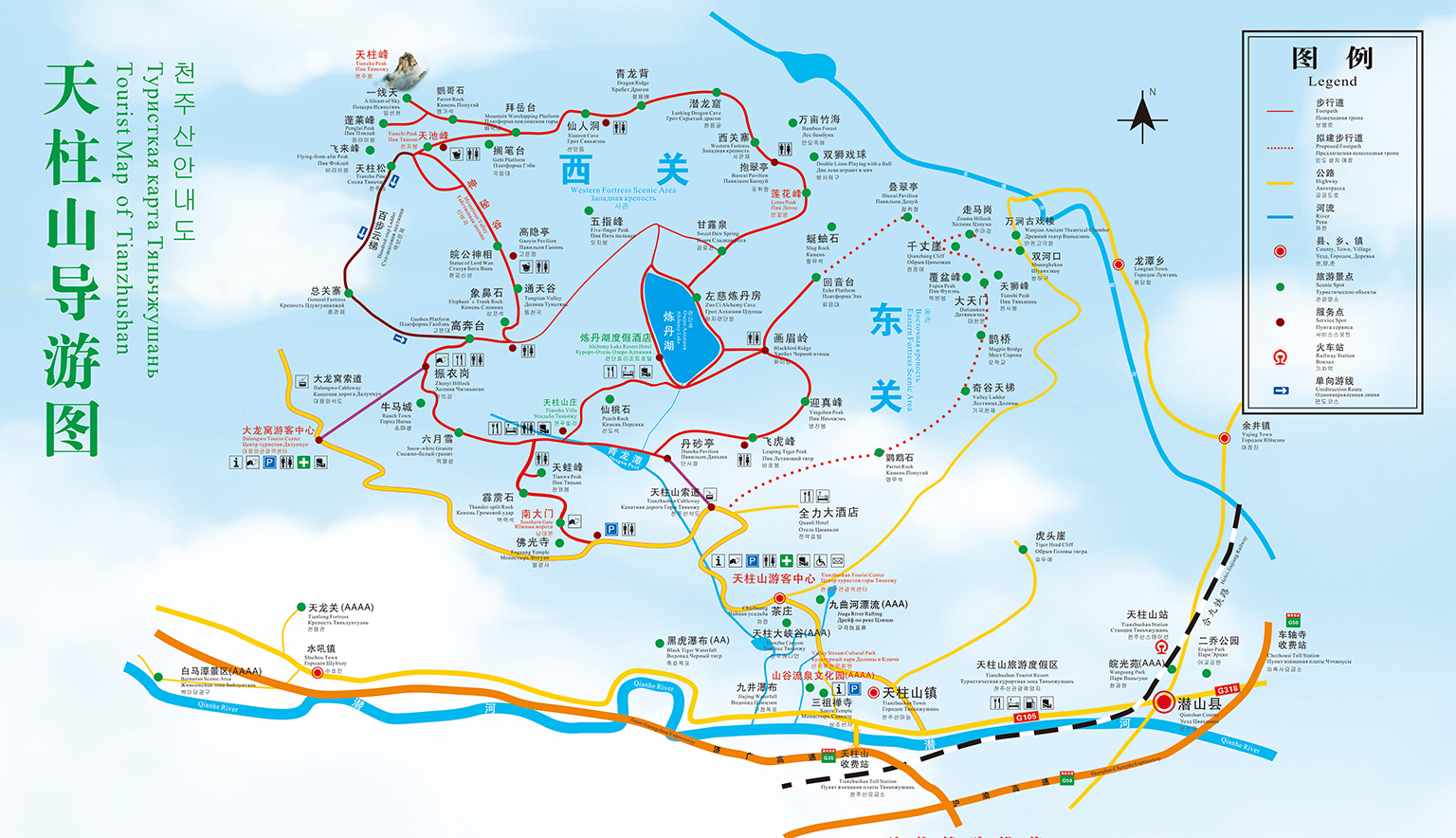
Tianzhushan World Geopark is located in Anqing City in southwestern Anhui Province, adjoining the Dabie Mountains to the northwest and bordering the Yangtze River to the southeast. Its geographic coordinates are 30°35′17″N ~ 30°48′41″N,116°16′04″E ~ 116°33′41″E
Tianzhushan belongs to the outlying range of the Dabie Mountains. Its terrain gradually transitions from high mountains to hills toward the southeast and southwest, with elevation decreasing step by step, forming a sequence of landforms including medium mountains, low mountains, hills, basins, and mountain streams.
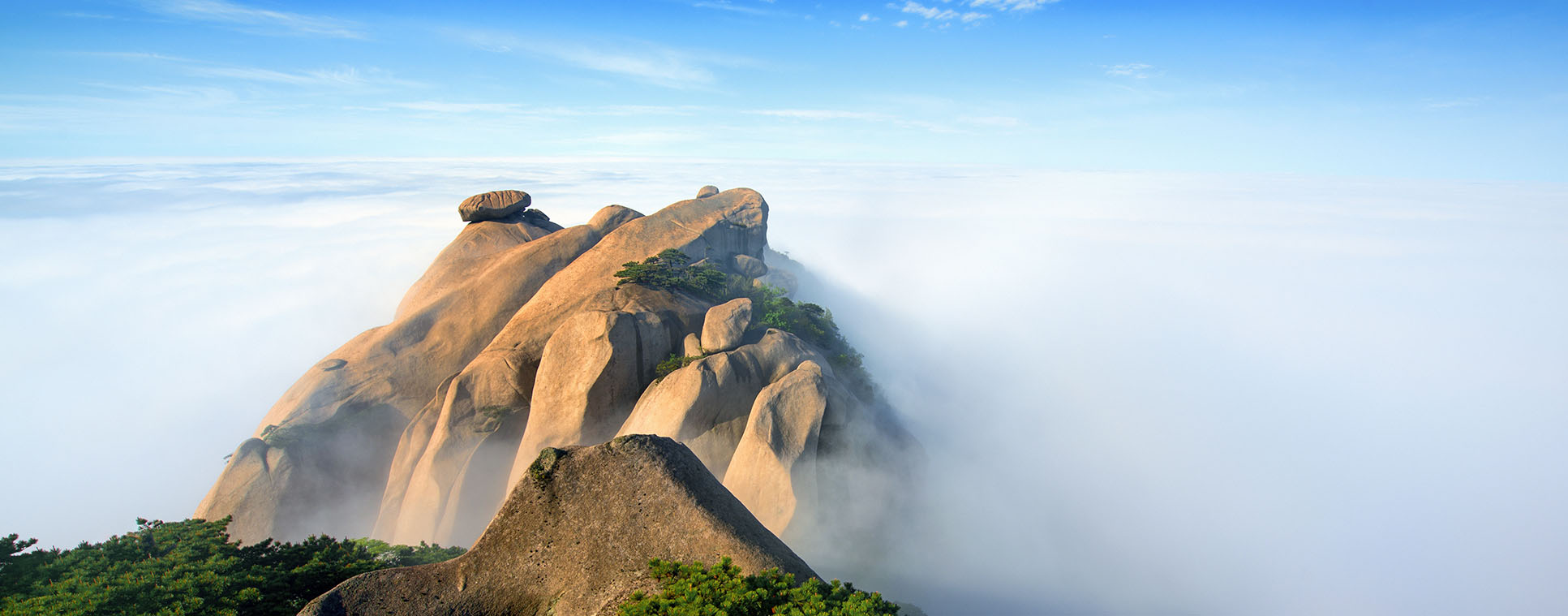
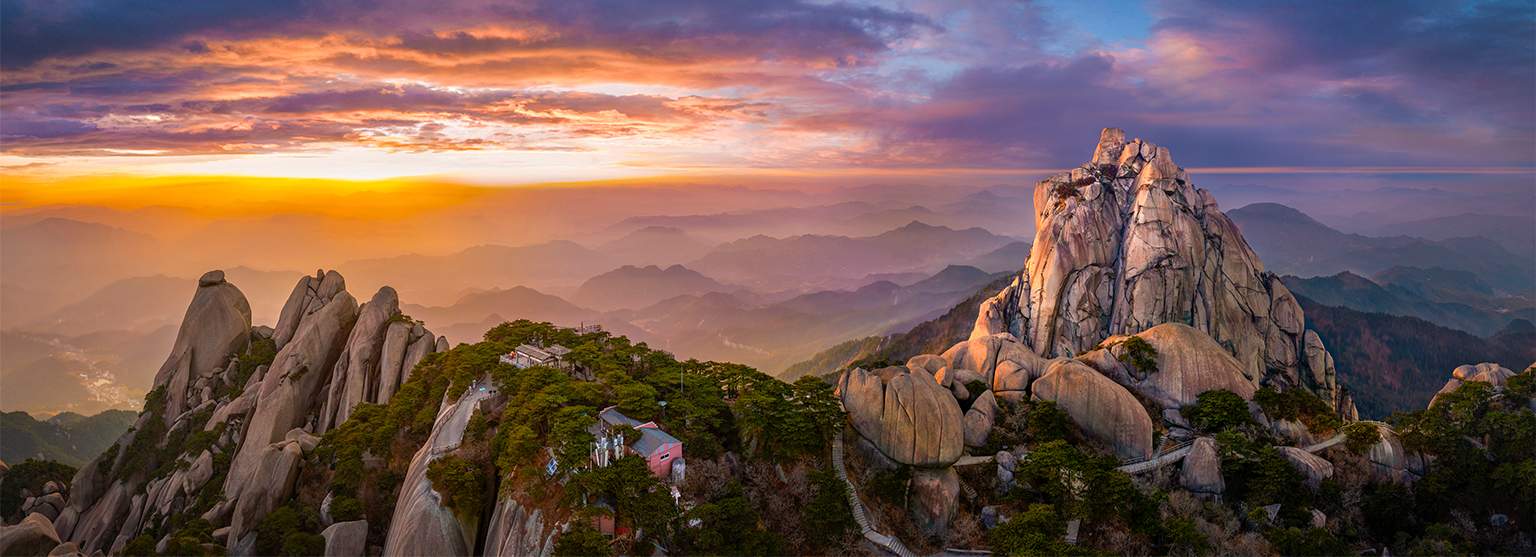
The core area around the main peak belongs to a medium-mountain landform and is a granite mountain scenic area. It features 47 peaks above 1,000 meters in elevation, deeply cut by numerous valleys, with towering cliffs and fantastic rock formations throughout, creating a magnificent landscape of peak forests and clustered summits. The outer area of the main peak belongs to a low-mountain landform, with elevations ranging from 500 to 1,000 meters, where waterfalls and deep pools are widely distributed. Beneath the peaks lie several small intermontane basins, all below 1,000 meters in elevation.
The outer edge of Tianzhushan consists of hilly landforms with elevations below 500 meters, where rocks such as granitic gneiss, biotite plagioclase gneiss, amphibolite, eclogite, and marble are widely distributed.
This combination of landforms forms the park’s highly distinctive geological and geomorphological landscape.