
Zheng Yangui: On Xiao Qiao Across the Ages
 90
90 2026-08-10
Zheng Yangui: On Xiao Qiao Across the Ages
By Zheng Yangui
Successfully integrating culture into tourism is a winning move that resonates with everyone.
Sure enough, on summer nights this season, Xuehu in Qianshan, at the foot of Tianzhushan, has drawn on the cultural legacy of the “hometown of the Two Qiaos” to launch the grand large-scale immersive waterborne night-tour performance Lakebound Dreams: Xiao Qiao’s Wedding. As visitors glide across the lake by boat, they can watch the story unfold layer by layer. Performers bring the drama vividly to life on floating stages, painted boats, and lakeside banks. Real scenery—mountains, ancient towers, pavilions, and waterside architecture—interweaves with projected water-screen illusions. People may either watch from the shore or approach the drama closely by boat, as if traveling back a thousand years into an age of war and tenderness, witnessing the epic love of heroes and beauties in the age of the Three Kingdoms. As the renowned Huangmei Opera artist Han Zaifen put it, this production interprets an extraordinary tenderness for home and country through a youthful and poetic mode of expression.
Watching people enter the lake and then enter the drama, their delight visible in both expression and voice amid the beautiful strains of Huangmei melodies, I found my emotions rising. The past came flooding back vividly, and with it a deep sense of comfort—that time has not been wasted, and that the culture of our homeland has not been let down.
That takes me back sixteen years. With the rise of tourism, people increasingly began to value scarce cultural resources associated with famous historical figures. In particular, as the new television adaptation of Romance of the Three Kingdoms became popular, the celebrated “Two Qiaos” (written as “Qiao” in this work, though later commonly rendered as “Qiao” with a different character) once again stirred public imagination, triggering a widespread contest over the rightful claim to the title “hometown of the Two Qiaos.” The dispute involved seven localities across five provinces, and Yiwu in Zhejiang even attempted to register “Hometown of the Two Qiaos” as a trademark.
As someone who had heard since childhood the story of the former site of Lord Qiao’s residence, one of the Ten Scenic Views of old Qianyang, I published articles in Xin’an Evening News on May 25, 2010, and Jianghuai Morning News on May 12, 2010, arguing against the far-fetched attempts by some places to attach themselves to historical figures or events. Drawing on official historical texts, archaeological relics, local gazetteers, and folk legends, I gradually built a comprehensive, multi-layered discourse system and evidence chain of my own. I then wrote a series of articles, including “Where Is the Hometown of the Two Qiaos Today?”, “On the Hometown of the Two Qiaos,” and “The Hometown of the Two Qiaos Is in Qianshan,” which were published in People’s Daily Overseas Edition on June 23, 2010, Xin’an Evening News on July 10, 2010, and Anqing Daily on June 12, 2010, respectively, and attracted attention both within and beyond Anhui Province.
After that, entrusted by the People’s Government of Qianshan County, I filed an objection against the attempted trademark registration of “Hometown of the Two Qiaos” by Yiwu Maiele Knitting Co., Ltd. of Zhejiang. Because the evidence was solid and the appeal well grounded, after a long three-year legal process, I finally received a ruling from the Trademark Review and Adjudication Board of the State Administration for Industry and Commerce at the end of 2015, officially revoking the trademark registration on the Zhejiang side.
Later, through further整理, extraction, and compilation, I produced Stories and Legends of the Two Qiaos, totaling tens of thousands of words, bringing the historical image of the Two Qiaos vividly to life from the mere few dozen characters devoted to them in the official Records of the Three Kingdoms. This work was submitted by the cultural authorities of Qianshan County and approved as part of Anhui Province’s intangible cultural heritage.
On that basis, I was invited to assist with the exhibition planning of the local Two Qiaos Park, where I took responsibility for writing the exhibition plan and participated in the design of statues and paired inscriptions. The goal was to establish the image of “Qiao Homeland” and vividly present the story of these two intelligent and graceful women—virtuous, wise, broad-minded, musically gifted, supportive of Eastern Wu, and instrumental in the alliance with Shu against Cao Cao—thereby reflecting the ideals of justice, beauty, and goodness cherished by ordinary working people.
Now, as a viewer of this production, I look back and see that those old affairs have all become part of the past, while new development is unfolding at exactly the right moment. I am grateful to the times and grateful to those who work in culture and tourism.
With heaven as stage, the light and shadow shine bright,
Talented sons and daughters renew the old delight.
Thus is Xiao Qiao’s first marriage remembered anew,
Look there—among Snow Lake’s clouds and waters in view.
Note: Key points of this essay can be found in “Embracing Mountains and Waters, Delighting in Life” in Wangeng Ji, published by People’s Publishing House in July 2021. Texts on the stories of the Two Qiaos are included in Looking Up to Tianzhu, published by China Literature and History Press in September 2025.
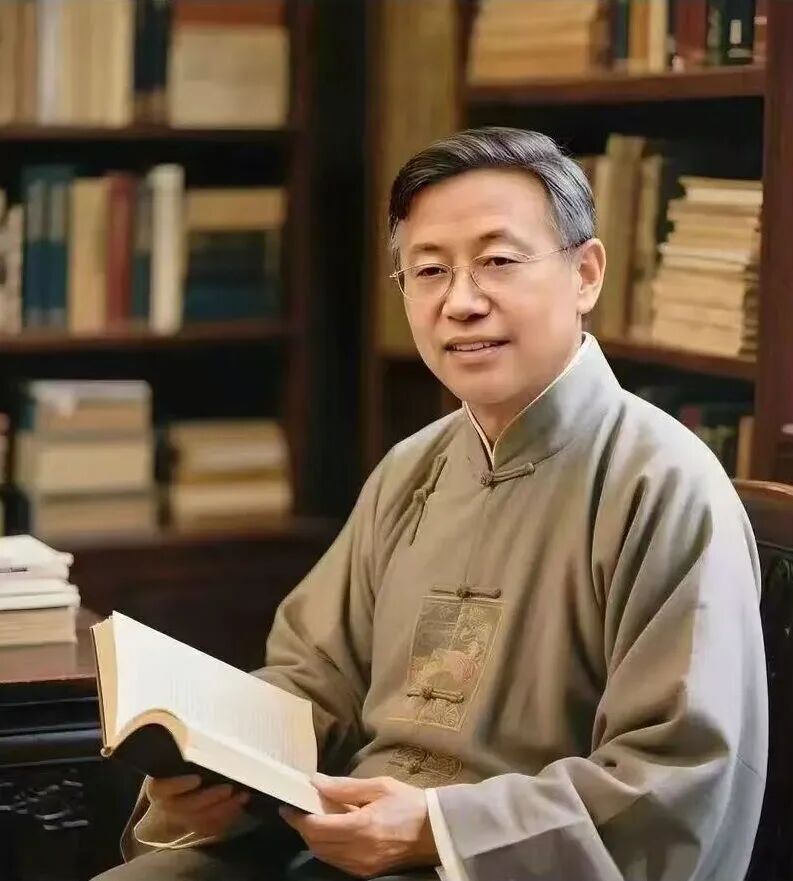
About Zheng Yangui
Zheng Yangui, a native of Tianzhushan in Anhui, graduated from the Chinese Department of Anhui Normal University in the Class of 1978 after the restoration of the national college entrance examination. He is currently a member of the Chinese Poetry Society, a member of the Anhui Writers Association, a part-time professor at Anqing Normal University, and a researcher at the Anhui Historical and Cultural Research Center.
His published works include the Anhui culture research monograph Wangeng Ji (People’s Publishing House), the essay collection Looking Up to Tianzhu (China Literature and History Press), and, as editor or co-editor, Research on the Origins of Anhui Culture, Tianzhushan Tourism, and Guide to Tianzhushan UNESCO Global Geopark. He also participated in the compilation of works such as Changgeng’s Light Shines on the Flourishing of Peking Opera.