Emotion as the Soul, Opera as the Bridge — Final “Masters Talk Cheng Changgeng” Workshop Concludes Warmly, Strengthening the Cultural Identity of the Hometown of Cheng Changgeng
 107
107 2026-07-31
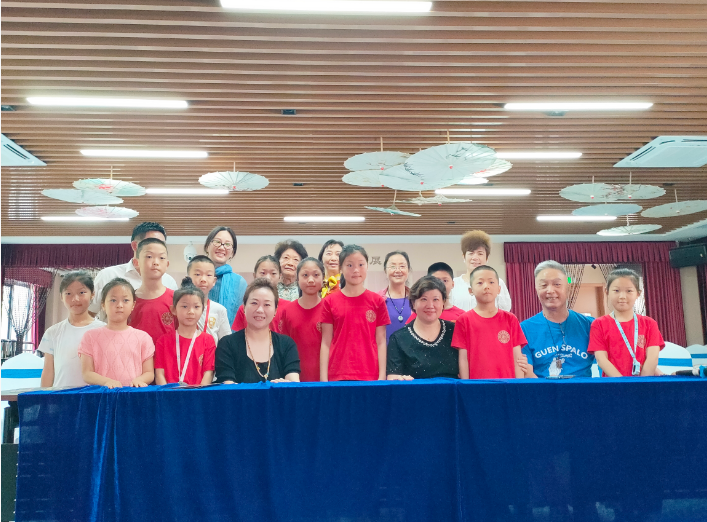
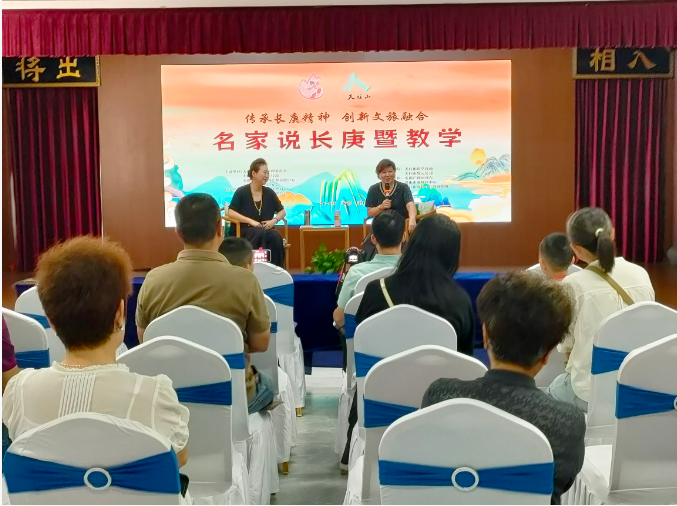
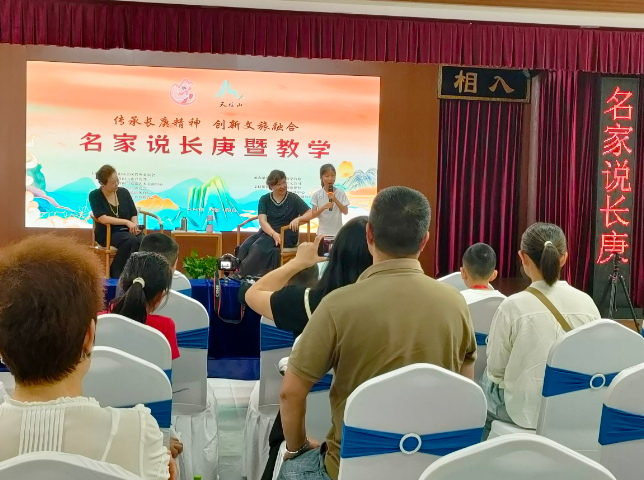
On the morning of July 30, amid enthusiastic applause and children’s laughter, the final session of the “Masters Talk Cheng Changgeng” teaching series concluded successfully at the Peking Opera and Huangmei Opera Arts Experience Hall of the Tianzhushan Study Camp.
As the concluding teaching session of Into the Hometown of Cheng Changgeng — the 3rd “Tianzhushan Cup” Youth Peking Opera Fan Competition, the event invited Kang Jing, a National First-Class Performer with the Beijing Peking Opera Theatre and a distinguished laodan specialist, together with Geng Lu, a National First-Class Performer with the Shanghai Peking Opera Theatre and a leading female hualian performer. In a relaxed and engaging setting, the two artists held an in-depth conversation with young contestants and their parents from across China about Peking Opera, personal growth, and cultural inheritance.
The Road to Opera
At the beginning of the workshop, Kang Jing spoke with feeling: “Watching you compete reminds me of the road we took.” She recalled that before entering opera school at the age of eight or nine, her father taught her four words: “Opera is greater than heaven.”
To protect her voice, she had to avoid cold drinks and overly sweet foods. While other children played outside during holidays, she stretched her legs and memorized lessons at home, progressing step by step from city competitions to provincial contests and then national stages. “When we traveled for competitions, my father worried that I would not sleep well in a new environment, so he would unplug the hotel telephone line to make sure I could rest. Before a competition, he would take me for a walk until I had worked up a sweat, helping my voice warm up.”
These simple memories reflected both a parent’s companionship and a deep reverence for art.
Geng Lu shared the “slow and steady work” of her own childhood training. “We began by reciting large characters, one by one, with resonance. Even in college, our teachers still required us to practice the line, ‘Bao Longtu sits in the Kaifeng Prefecture.’ It was not for show—it was to develop muscle memory, so that the moment you open your mouth, your delivery follows proper standards.”
Both artists emphasized that learning opera is not only about mastering singing techniques. It is also about learning how to conduct oneself, persist through challenges, and develop discipline. As children grow from being self-willed to becoming polite, respectful of rules, and able to endure hardship, Peking Opera gives them some of the most valuable nourishment for life.
Teaching Through Emotion
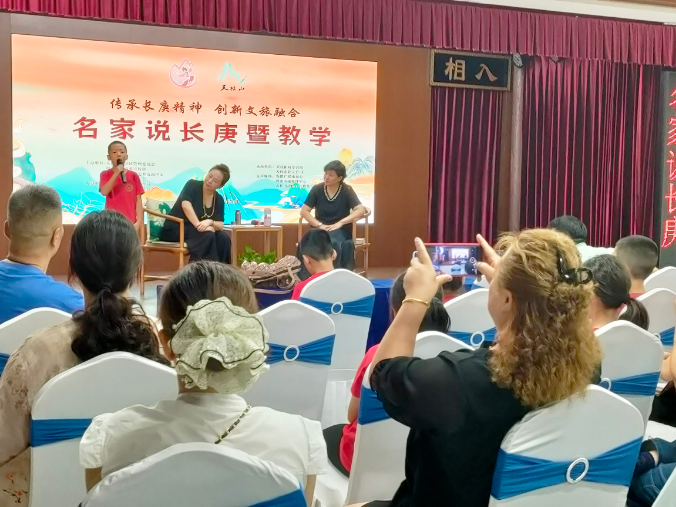
Facing an audience of eager young performers and parents, the two artists did not speak in abstract terms. Instead, they carefully broke down sophisticated vocal techniques and methods of character creation into clear, practical lessons.
Using classic laodan works such as Fishing for the Golden Turtle and Beating the Dragon Robe, Kang Jing taught the children to understand the emotions behind the lyrics. “The four characters ‘Yang Xiang Fights a Tiger; Meng Zong Weeps for Bamboo’ each contain a story of filial devotion. You must first understand why a character cries and why a character feels joy. Only then will your expression and emotion be right when you sing.”
She encouraged parents to read scripts with their children and consult reference materials to understand the plot before singing. In this way, performers can let emotion guide their acting and find greater meaning in each performance.
Geng Lu focused on vocal power and performance details in hualian roles. She demonstrated how reciting large characters helps performers find the correct vocal placement, making the voice more resonant, powerful, and substantial. She also noted that the eyes are an opera performer’s “second mouth”: “The muscles around the eyes must work, and there must be light in the eyes—especially when emotion is present.”
She encouraged the children to first consider what a character is feeling before performing any excerpt: “First, it must exist in your heart; then it can exist in your voice. As you keep performing, what remains in the end is solid fundamental training.”
Opera as Love Education
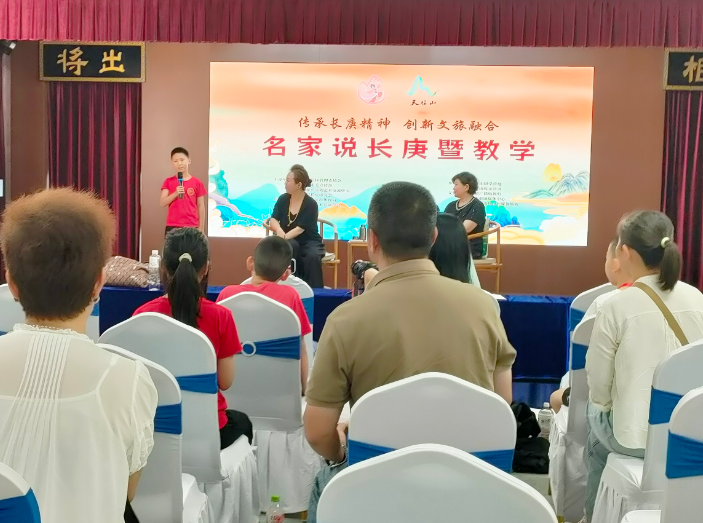
During the workshop, both artists spoke of Peking Opera’s profound role in shaping children’s character. Kang Jing shared that she often tells young students stories from the Twenty-Four Filial Exemplars, encouraging them to hug their parents on Father’s Day and Mother’s Day. On her own birthday, she would kneel before her mother and sing an opera excerpt in gratitude.
“One young student went home and did the same on their birthday—kneeling before their mother and singing the line ‘Your son kneels before you’ from Fishing for the Golden Turtle. It moved the mother to tears,” she said. Kang reflected that Peking Opera helps children understand filial respect and etiquette, while also giving them a space to release pressure and build inner strength amid demanding schoolwork.
Drawing on her own teaching experience, Geng Lu added: “Some children speak softly in daily life and often feel wronged. I encourage them to study hualian roles and shout their voices out. A year or so later, the whole family may be singing: the father hums in the kitchen and the mother hums in the living room. Peking Opera becomes a shared topic for the family.”
In her view, art is never merely technique; it is a bond that brings joy, emotional well-being, and family harmony.
A Living Hometown Legacy
The successful conclusion of this workshop added another highlight to the multi-day cultural program in the Hometown of Cheng Changgeng. As the birthplace of Cheng Changgeng, a founding master of Peking Opera, Qianshan used the event to integrate opera inheritance, educational travel, and cultural tourism.
Through master talks, youth competitions, intangible cultural heritage handicrafts, calligraphy and painting exhibitions, and immersive study camps, the program brought the historic art of Peking Opera to life amid Tianzhushan’s mountains and waters, making the cultural identity of the Hometown of Cheng Changgeng shine even more brightly.
As Kang Jing observed, “Seeing so many children, parents, and teachers taking part makes me feel that the Tianzhushan Cup competition must continue. It is truly an excellent way to preserve and popularize Peking Opera.” Geng Lu likewise noted that children gathering from across China in Cheng Changgeng’s hometown represents both a cultural return to one’s roots and a spiritual journey.
With emotion as its soul and opera as its bridge, the masters passed on far more than vocal techniques and stage movements. They shared reverence for tradition, care for younger generations, and a commitment to ensuring that this national art form continues from one generation to the next. In the place where Cheng Changgeng began his own journey, a new generation of young Peking Opera performers is growing strong, while the cultural brand of the Hometown of Cheng Changgeng continues to flourish through both innovation and inheritance.