
Peking Opera Masters Pass On Their Art, Keeping the Legacy Alive in the Hometown of Cheng Changgeng
 116
116 2026-07-30
In the height of July, Qianshan—the hometown of Cheng Changgeng—welcomed a distinctive event dedicated to the inheritance of Peking Opera. During the 3rd “Tianzhushan Cup” Youth Peking Opera Fan Competition, the second session of the “Masters Talk Cheng Changgeng and Teaching Workshop” was warmly held on July 29.
Renowned Peking Opera artists Song Xiaochuan, Chang Qiuyue, and Li Bo met face to face with young amateur performers from across China, offering hands-on instruction and personal guidance. With sincerity and professionalism, they ignited the children’s passion for Peking Opera.
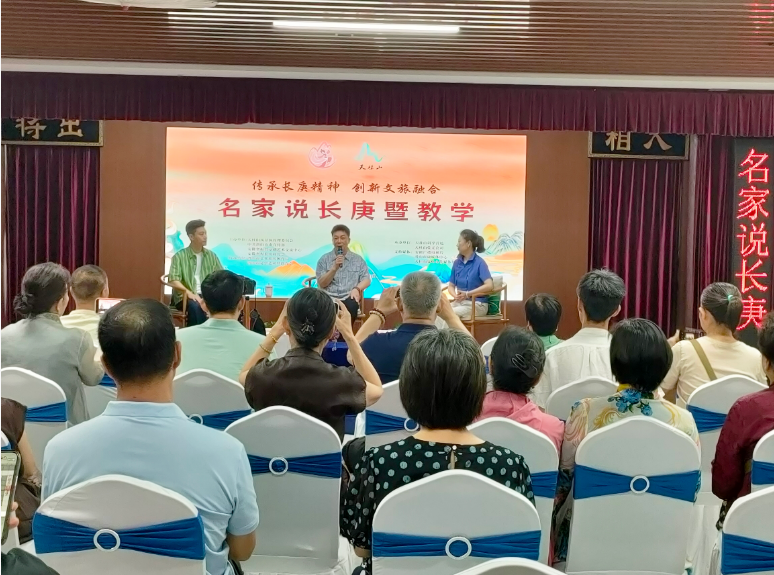
Close Interaction with Masters
“We are simply here to chat. If you have questions about huadan, laosheng, or xiaosheng roles, we will answer whatever we can—and do our best to find answers when we cannot,” Song Xiaochuan said at the start, immediately narrowing the distance between the masters and the children.
Chang Qiuyue patiently addressed questions from young local Peking Opera enthusiasts in Qianshan about pronunciation, including the distinction between jiantuan sounds and traditional stage pronunciation. Drawing on lines from The Matchmaker, such as “the Zhang family’s wowo” and “the Zhang family’s elder brother,” she used accessible examples to make abstract vocal techniques vivid and easy to understand.
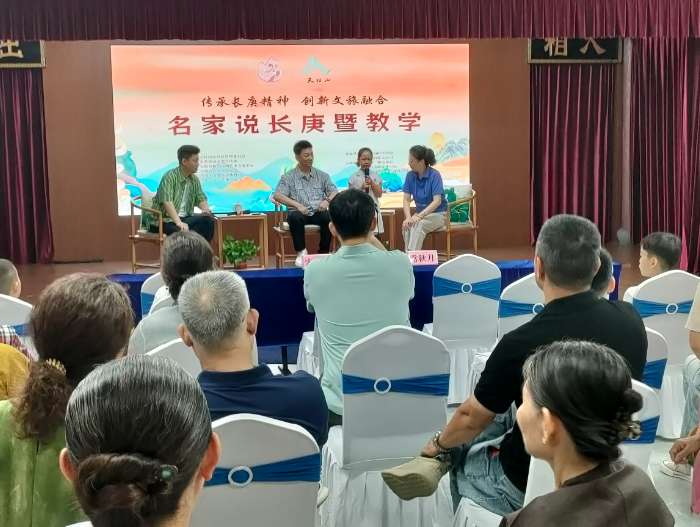
Tailored Teaching
Faced with students of different ages and skill levels, the three artists demonstrated remarkable teaching insight. For one nine-year-old student who had studied Peking Opera for four years, Song observed that the child had a good vocal opening but needed to develop greater stylistic flavor. He stressed the importance of practicing both rhythmic speech and spoken delivery: “When your spoken delivery improves, your singing will naturally open up as well.”
He encouraged the child to mark difficult characters with pinyin, making the connection between Peking Opera pronunciation and standard Chinese phonetics more approachable. Song also personally demonstrated open- and closed-mouth vocal exercises using the repeated word “coffee,” prompting many young participants to follow along.
Chang Qiuyue offered advice tailored to a young girl’s vocal characteristics, suggesting that she practice vocalization while lying down. Once she found the feeling of breath support, she could stand up and sing. “When you find that sound and then stand up to project your voice, your awareness and technique will become part of your style,” she explained.
Li Bo patiently corrected the students’ diction word by word. He also invited them to sing excerpts from The Red Lantern with him, using collaboration to build their confidence. Praising a young participant from Chongqing, Li noted that “the beginning and ending of each word are both very good; the next step is to focus on emotional expression.” He then joked, “People in Chongqing eat chili peppers—their voices are good, and they get plenty of vitamin C!” drawing laughter from the audience.
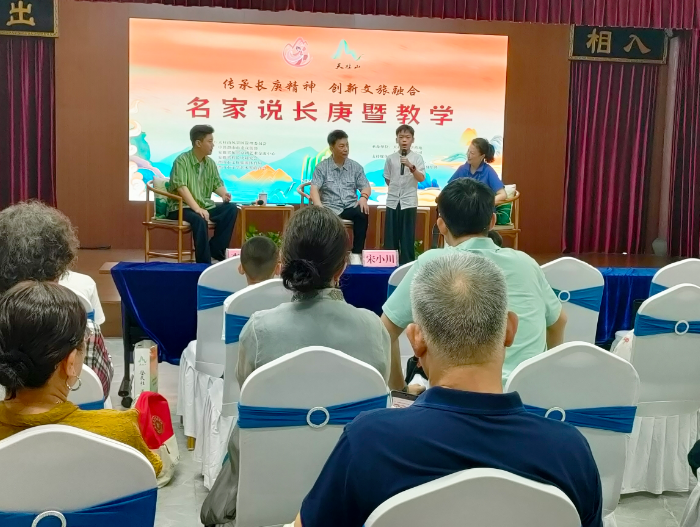
Encouragement and Warmth
The workshop offered not only professional instruction but also a deeply encouraging atmosphere. When a young local participant from Qianshan became too nervous to sing, Chang gently reassured the child: “Your voice is very good. Once you find the breath support, singing will become much easier.”
Song emphasized that “every melodic phrase is carried forward by breath; it takes time to master it gradually.” After one student performed an excerpt from Waiting for the Moon at the Western Chamber, Song praised the child as “very bright and quick to improve with just a little guidance,” encouraging continued study with their teacher.
At the end of the event, the three masters and the young participants sang classic excerpts together, creating a series of heartwarming moments in the hometown of Cheng Changgeng. As one parent remarked, “This kind of activity not only teaches children techniques, but also lets them experience the charm of Peking Opera and the warmth of its masters.”
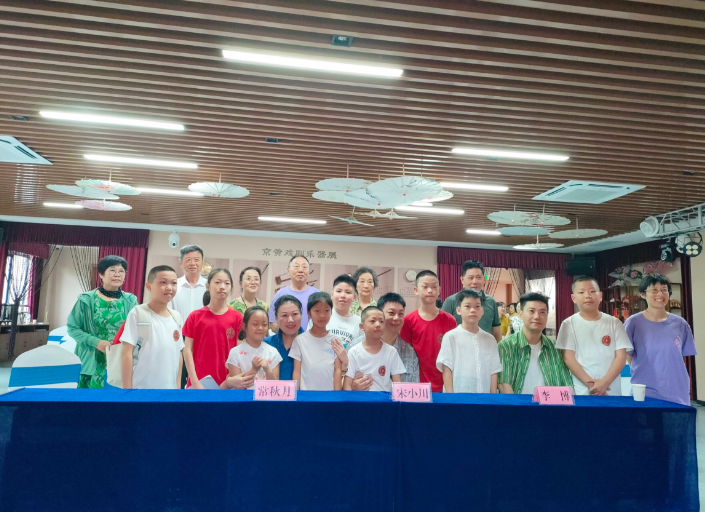
A Living Cultural Legacy
As the hometown of Cheng Changgeng, a founding master of Peking Opera, Qianshan carries a profound operatic heritage. Linked by the shared identity of the “Hometown of Cheng Changgeng,” this event brought leading artists and young Peking Opera enthusiasts together, enabling the art form to be passed on as a living tradition.
From casual conversations, to precise hands-on coaching, to heartfelt encouragement, the three artists demonstrated the full meaning of inheritance: passing on not only artistic skill, but also feeling, care, and spirit.
The 3rd “Tianzhushan Cup” Youth Peking Opera Fan Competition is more than a contest of performance skills; it is also a relay of culture. In Qianshan’s fertile operatic landscape, the seeds of Peking Opera are taking root in children’s hearts, while the cultural identity of the Hometown of Cheng Changgeng shines ever more brightly through this meaningful and deeply human transmission of heritage.