
Tianzhushan UNESCO Global Geopark Discovers a New Plant Species
 164
164 2026-05-07
Recently, the international plant taxonomy journal PhytoKeys officially published a research result reporting that researchers including Li Bo from Xishuangbanna Tropical Botanical Garden, Chinese Academy of Sciences, discovered and named a new species of the genus Mazus in Tianzhushan UNESCO Global Geopark, Anhui — Mazus unguiculatus Bo Li. This is another endemic new species discovered in Tianzhushan in recent years, further highlighting the park’s exceptional biodiversity and ecological conservation value.
The new species was first discovered in July 2021 in steep rock crevices in the Tianlongguan area of Tianzhushan UNESCO Global Geopark. After years of field monitoring, specimen collection, and morphological dissection, combined with phylogenetic analyses based on chloroplast and nuclear gene sequences, the research team ultimately confirmed it as a distinct new species. It is also one of the important new Mazus species discovered in China over the past decade.
In terms of morphology, Mazus unguiculatus Bo Li is a perennial herb with slender, drooping branches and a markedly elongated inflorescence. Its flowers are white to pale purple. The upper lip of the corolla is two-lobed, with slightly notched lobe tips, while the lower lip is deeply three-lobed, with nearly equal lobes, short claw-like bases, and shallow teeth at the apex. It also lacks the palate structure typical of Mazus species, a feature that is extremely rare among known species and gives it high taxonomic distinctiveness. This species grows only in low-elevation rock crevice habitats. Its flowering period lasts from June to August, and its fruiting period from July to September. At present, it is known only from the Tianlongguan area of Tianzhushan.
Botanical experts noted that the discovery of Mazus unguiculatus Bo Li not only enriches the species diversity of this plant group in China and improves the systematic taxonomy and evolutionary framework of the genus Mazus, but also provides key scientific material for studying the formation of the flora of eastern China and the adaptive evolution of lithophytic plants, giving it important academic value.
Located on the eastern foothills of the Dabie Mountains, Tianzhushan UNESCO Global Geopark has an intact ecosystem and unique habitat types, making it an important species gene pool in eastern China. As a well-preserved representative ecological area within the park, Tianlongguan features steep mountains and numerous rock faces, providing a natural habitat for many rare plants. In recent years, with continued efforts in biodiversity surveys and conservation, multiple new species and newly recorded species have been discovered in the park. The formal publication of Mazus unguiculatus Bo Li is not only an important result of long-term scientific monitoring and field research, but also strong evidence of the effectiveness of ecological conservation in Tianzhushan, contributing Tianzhushan’s strength to global biodiversity conservation.
(Text: Cheng Xiaoqing; Photo: Zhu Xinxin)
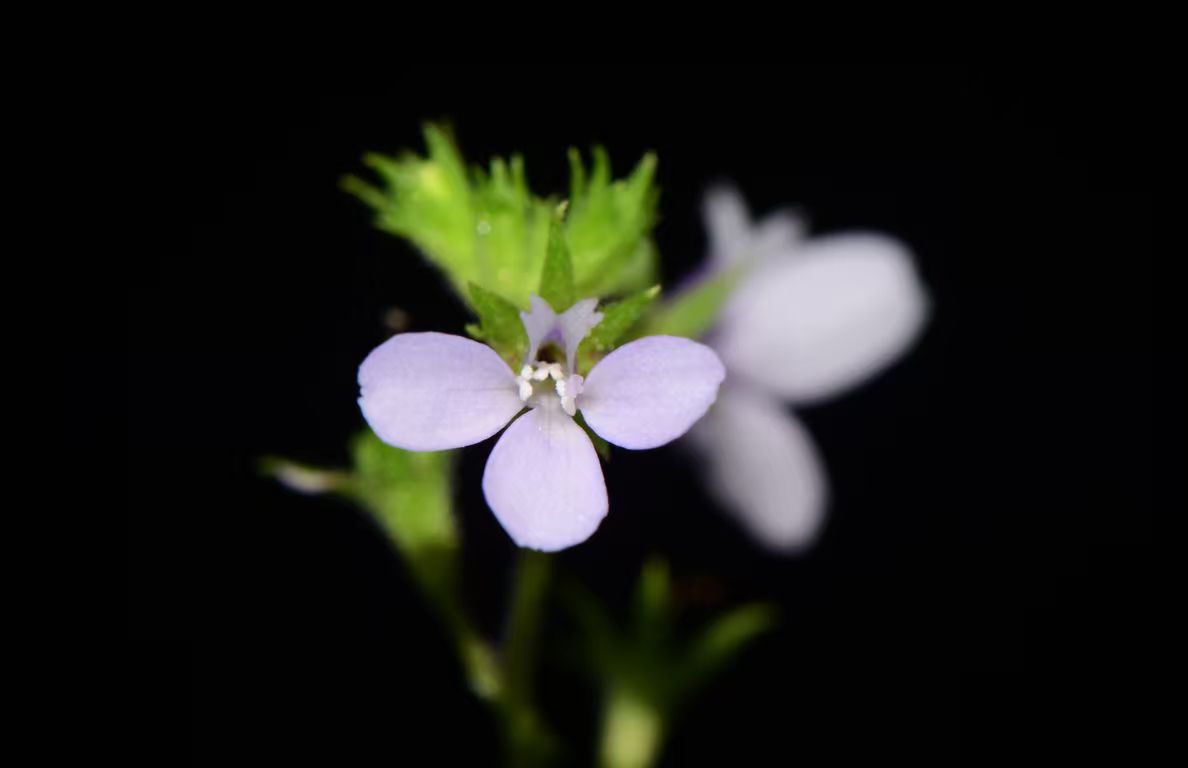
Close-up of the flower of Mazus unguiculatus Bo Li, clearly showing its pale purple corolla, three-lobed lower lip, and distinctive short claw structure.
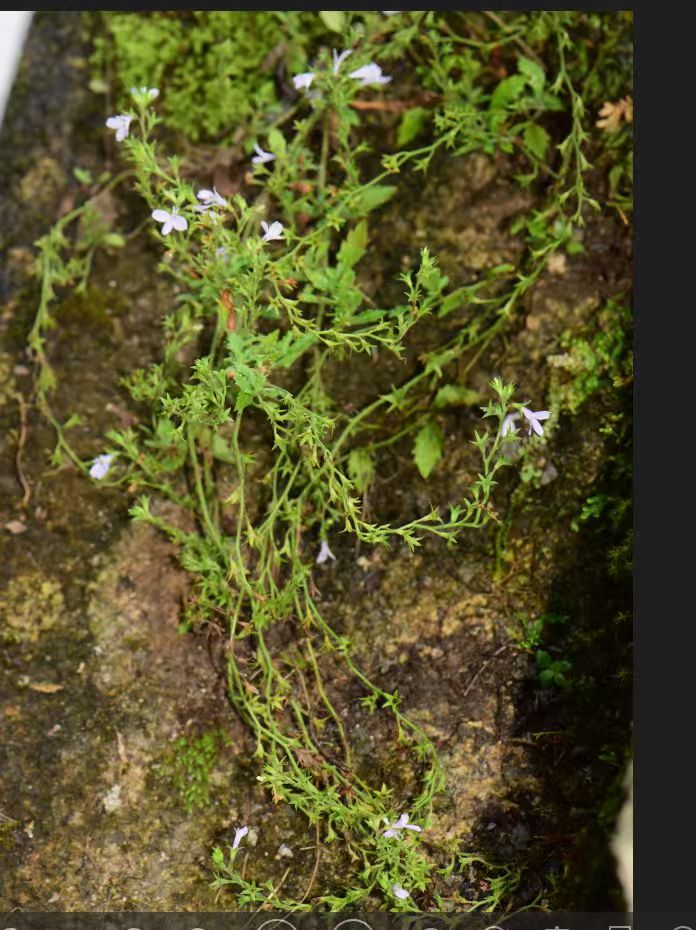
Field habitat photo.